 Flame-Dried Figs


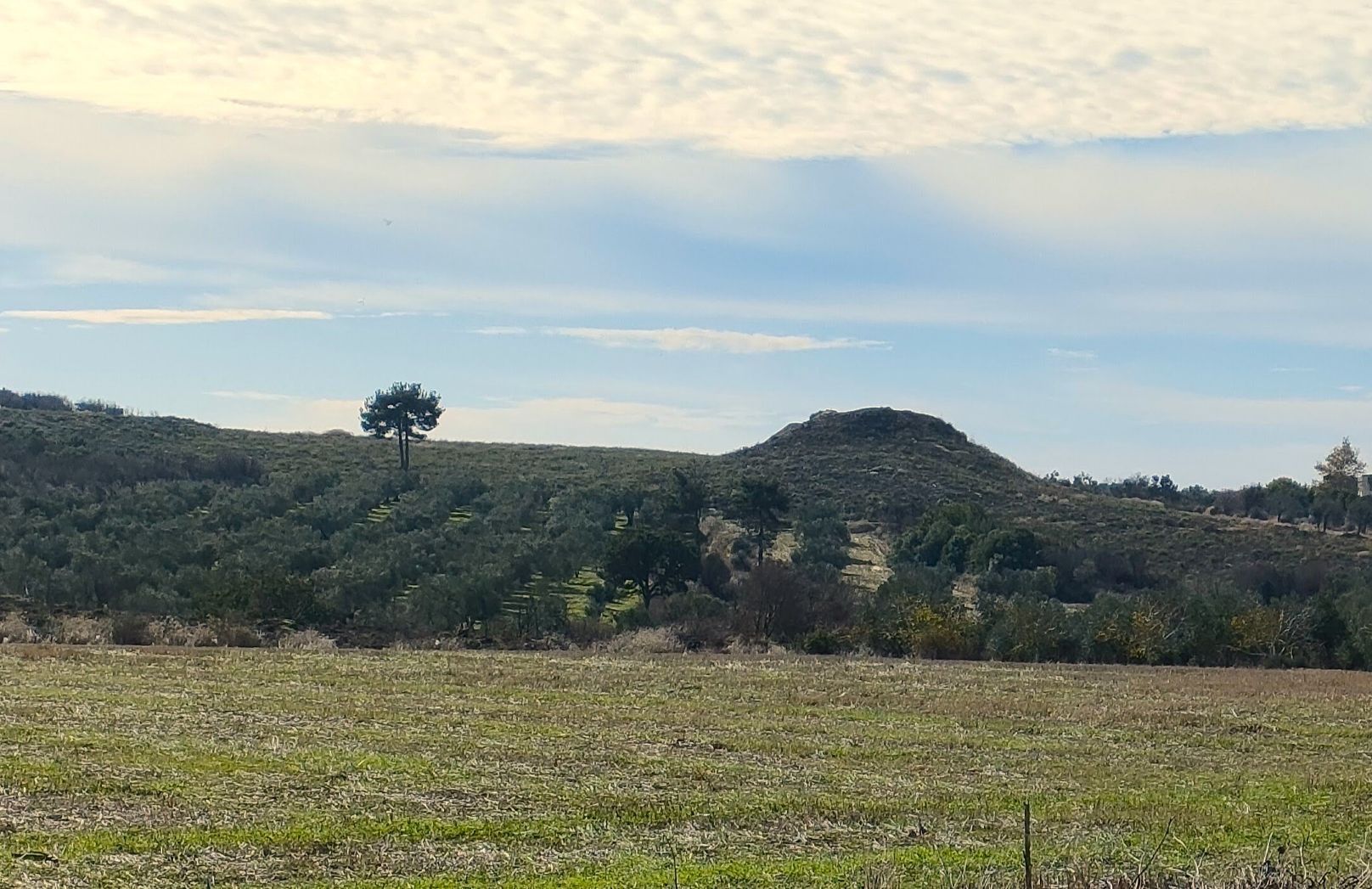
The fire that burned in our area last year left large patches of land uncovered. Without their canopy of pine trees, the pale stony soil is visible, especially on the hills.
As we approach our home, the view along the main road is no longer a few quick glimpses of the mouth of the Dardanelles between trees, but a broad sweep of land and sea from Kumkale on the Anatolian side to Seddulbahir and the Abide monument on the European side at the tip of the Gallipoli peninsula and the southern part of the straits. Half a dozen ships may be in view, on a sea that apparently stretches up to the horizon, seemingly higher than the road. It’s a small consolation after the destruction of the fire.
The notable thing is the number of small hills concealed by all the trees, some of which don’t appear to be entirely natural. One in particular stands out, built atop a ridge and clearly standing out from the surrounding countryside. Looking from there, several other hills also look suspiciously like man-made mounds.
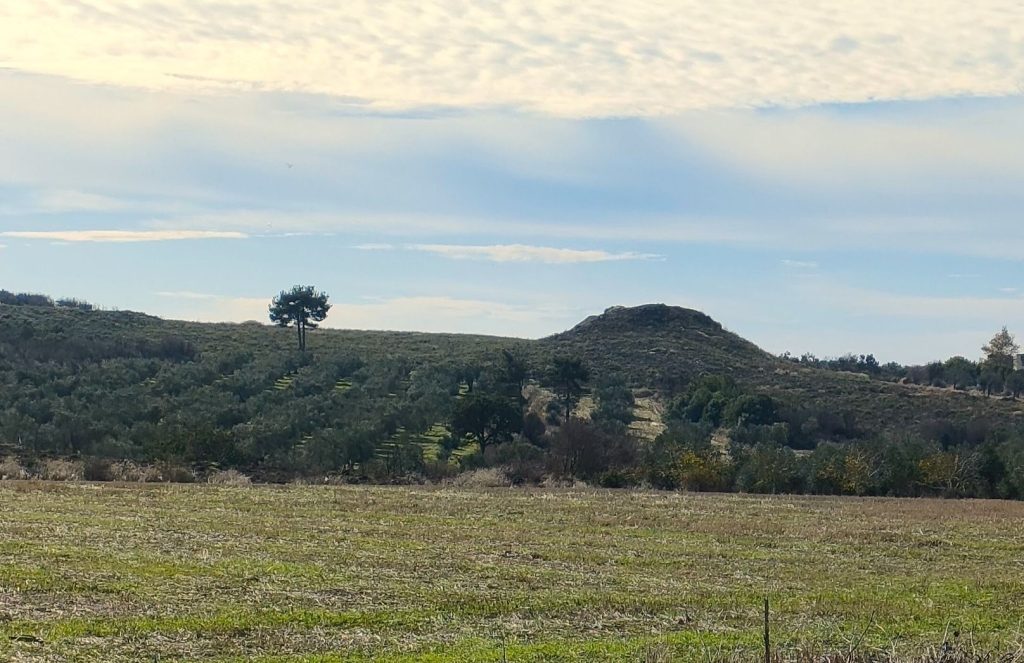
The mound drew the attention of several people, including a local geologist who loves to talk to the local press. It also attracted interest from individuals less interested in the archaeological and scientific value of the mound. A small excavator was used to dig 8 metres into the side. Apparently nothing was found, but who knows.
So when we saw people up on the mound several days in a row, our curiosity was piqued. We drove up and found a team of two archaeologists from the Troy Museum and four workmen with shovels digging into the top of the mound. Some geophysical surveys had been done, and they had dug down at a few points around the mound before deciding to dig straight down from the top.
They aren’t the first to try. Clearly the centre of the mound had been hollowed out when the mound was still covered with trees, leaving a crater with a smaller hole extending further in.
The archaeologists expected to be at the mound for about a month and regretted the fact of needing more funding for more intensive work. As usual, they have to find something of interest to get funding, but can’t excavate to find anything without funding.
They had taken part in a salvage excavation on another hill, easily seen from the mound. There they had found two sarcophagi, but nothing further.
So far, the only find was a fragment from the base of a sarcophagus. The mound is composed soil and rock fragments, apparently from the surrounding area. The geology of the area is poorly-consolidated marine terraces. It’s pretty soft and friable, easily dug with a pickaxe.
Have your say!